

Growing Your Hair Out as a Man (Without Quitting at the Awkward Stage): A Barber’s Reality Check
Growing it out isn’t “just don’t cut it.” It’s patience, proper care, smart shaping, and knowing how to look decent through the messy middle. We see this every day in our barbershops—where guys give up, and how to avoid it.
Book nowGrowing it out isn’t “just don’t cut it.” It’s patience, proper care, smart shaping, and knowing how to look decent through the messy middle. We see this every day in our barbershops—where guys give up, and how to avoid it.
Book nowGrowing out hair isn’t a vacation from the barbershop
Most guides make it sound like you simply wait and nature does the rest. We don’t fully agree. In real life, “growing it out” is a managed process: routine, damage control, and keeping a shape. Otherwise you’re not growing hair—you’re growing chaos.
The source gets the core truth right: you can’t magically make hair grow faster. Average growth is about 12 mm per month. That number is a mood-killer for some guys, but it’s also freeing—because it forces you to think in systems, not in hype. Long hair is a months-to-years project.
We see this every day: a client comes in with a reference photo and confidence, then 6–8 weeks later says, “Fix this, it’s sticking out everywhere.” That’s the awkward stage, and it’s not a sign you’re failing—it’s the normal middle where your hair hasn’t gained enough weight to fall into place yet.
The article’s baseline routine is solid: gentle sulphate-free shampoo, don’t overwash (often 2–3 times per week), conditioner after shampoo, and heat protectant before dryers/straighteners. This works in theory, but in real life it only works if you apply it to your scalp type, your lifestyle, and your habits (how you towel-dry, how hot you blow-dry, whether you scratch your scalp). The details decide whether you keep length or break it off.
One thing we’ll say bluntly: “wash less” is not a badge of honor. If your scalp is oily, you train a lot, you wear caps/helmets, or you get itchy buildup—forcing a 2–3 times rule can backfire. What matters is using a mild cleanser, washing properly, and rinsing thoroughly. Healthy scalp, healthy hair.
Another real-world point: looking good during the process is half the battle. Hair grows slowly; without a controlled outline, you’ll feel like you’re just letting yourself go. That’s when guys panic and go back to a short cut.
Our stance at Lumberjack is simple: growing out hair should still look intentional at every stage. Not perfect—intentional. That means a plan, small corrections, and learning a couple of easy styling moves so you don’t hate your reflection for six months.

The source recommends: sulphate-free shampoo, conditioner, heat protection; experiment with styles; use products like pomade/clay/wax; consider a man bun/top knot; trim every 6–8 weeks. We agree with the framework, but we’re adding the barbershop-level nuance—because this is where most men slip.
Shampoo frequency (2–3 times/week) is a good general starting point, not a law. For some scalps it’s perfect; for others it’s unrealistic. If you sweat daily or get greasy quickly, washing more often with a gentle shampoo is better than walking around with irritated scalp and buildup. In practice, the technique matters: fingertips (not nails), focus on scalp, and rinse like you mean it.
Conditioner is not optional once you’re past a short crop. The source is right: apply it mainly to mid-lengths and ends. That’s where dryness and tangles live. Putting heavy conditioner on the roots is a common mistake—people do it to “make it softer,” then complain their hair looks dirty by day two.
Care, styling, trimming: what actually keeps your length
Heat protection: yes, use it if you blow-dry or straighten. But what we see more often is guys using the dryer like a blowtorch—max heat, too close, parked on one spot. Or the opposite: going to bed with wet hair, waking up with friction damage and weird bends. Real-life rules: towel-blot (don’t rub aggressively), medium heat, keep the dryer moving, and don’t cook your hairline every morning.
Styling while growing: the article suggests pomade/clay/wax for control, texture, and volume. True—but product choice and amount are everything. The #1 barbershop mistake is heavy product on fine hair: it collapses, looks greasy, then you overwash and overheat trying to fix it. The #2 mistake is using nothing and living with frizz and “mushroom” shape. The practical move: start tiny, warm it in hands, layer if needed, and choose the finish based on your hair (fine, thick, curly) and your goal (control vs texture).
Man bun/top knot: stylish and practical at the right length, no question. But we’re not going to pretend daily tight tying is harmless. Constant tension can lead to breakage around the tie point and stress at the roots. In real life, rotate styles, don’t crank it tight, and use soft bands (no metal parts).
Trimming every 6–8 weeks is one of the best points in the source, even if it sounds counterintuitive. The key is what kind of trim. A “growth trim” is not a reset—it’s removing split ends, cleaning the perimeter, and keeping a shape so your hair looks like a choice, not neglect. In our barbershops we often do minimal perimeter work and targeted cleanup to protect length while improving the silhouette.
How long it takes—and how to not quit halfway
Timeline-wise, the source stays realistic: hair grows around 12 mm per month, and long hair takes years. Straight hair often reaches a truly long look in roughly 2–3 years. Curly hair can take 3–4 years and still look “shorter” because of shrinkage. Thick hair isn’t necessarily slower-growing, but it can feel harder to manage during transition stages. Fine hair may look longer sooner, but it’s typically more prone to breakage—meaning you must be disciplined with handling and heat.
We believe the real formula is simple: length = growth minus breakage. You can’t speed growth much, but you can absolutely reduce breakage. Most guys who “can’t grow hair” actually grow it—and then snap it off with rough towel drying, too much heat, skipping conditioner, or never cleaning up split ends.
The awkward stage isn’t a test of patience; it’s a test of strategy. Change your part, add texture, control volume, and keep the neckline/temples from exploding. That’s the difference between “I’m growing it out” and “I haven’t had a haircut in months.” In practice, this is what keeps you on track.
We’re not here to sell miracles or pretend one product fixes everything. But if you want long hair and you also want to look sharp while you get there, you need a plan and a barber who understands transition shaping—cleaning things up without stealing your progress. That’s what we do at Lumberjack: we map the stages, schedule sensible trims, and teach you a realistic at-home routine that fits your hair and your life.
Barbershop Gallery for the article

Massage + Active Products
The massage boosts circulation, releases tension, and gives your head a true reset. At the same time we apply active products — tonic, ampoule, or serum — depending on the goal (hydration, balance, tone).
- Relax effect and tension release
- Supports a healthy scalp condition
- Active products matched to your goal

Active Treatment
Next, we address your skin’s needs: hydration, calming, or toning. Products are selected individually to improve skin condition and appearance.
- Products chosen for your skin needs
- Reduces irritation and dryness
- Fresh and well-groomed appearance

Recovery & Relax
This stage focuses on skin recovery after cleansing. Treatments calm the skin, reduce tension, and restore a healthy, even look.
- Calming effect without heaviness
- Reduced redness
- Immediate post-treatment comfort

Scalp Assessment
Head care starts with a quick scalp assessment: dryness, oiliness, irritation, dandruff, sensitivity, or scalp fatigue. This helps us choose the right products and massage intensity.
- Care matched to your scalp type
- We consider washing routine and styling products
- Can be a standalone treatment or add-on

Most frequent questions
-
What is included in the "Head care" service and what does the barber do?
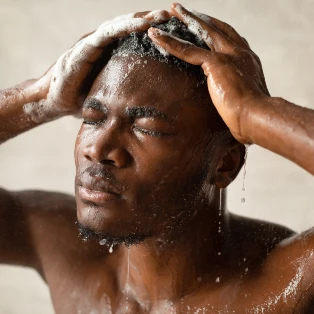
"Head care" is a combo of scalp cleansing, special products and massage. The barber washes your head with professional shampoo, may do a gentle exfoliation, applies a care product and performs a massage that relaxes the muscles, improves microcirculation and helps the scalp “breathe”.
-
What is included in the "Styling and outline" service and when is it used?
"Styling and outline" is a quick refresh without a full haircut: we clean up the outline around the perimeter, neck, temples and fringe, and do a neat style with product. Clients usually choose it between haircuts, before meetings, dates, events or photoshoots when they need to look fresh but don't want to change the haircut itself.
-
What is the "Clipper cut" service and who is it for?
A clipper cut is a men's haircut done with clippers using one or several guards, without complex scissor work. It suits those who want a fast, low-maintenance and neat option with minimal styling: for work, sports, army-inspired looks or just a clean, minimal style.
-
What is included in the "Men's haircut" service?
A standard men's haircut includes a consultation with the barber, selecting the shape to match your face and hair type, the haircut itself, outlining, basic styling, and home-care recommendations. If needed, the barber can also adjust your beard and brows so the whole look feels complete.
-
Where can I see prices and how can I pay?
Up-to-date pricing is shown on the location page and during online booking. Payment: cash, card, Apple Pay/Google Pay. A receipt is provided after your visit.
-
How to book and understand barbershop pricing?
Book online or by phone; current prices and durations are listed on service pages. Choose a barber by style and experience.
Read also



Don’t miss new materials about barbering
Subscribe and get useful tips.

Book a haircut right now
Treat yourself to an hour of true relaxation and a stylish look